
Elite Automation Edge Newsletter Q2 2025: Your Source For Everything Automation
Welcome to the Elite Automation Edge Newsletter, your go-to source for everything automation and beyond. Each issue pairs in-depth technical insights on material handling, vision-guided systems, predictive maintenance and much more with lighthearted puzzles, fun facts, and real-world success stories. Think of us as your engineering mentor and industry insider rolled into one, delivering expert tips alongside a dash of entertainment. Whether you’re streamlining your floor or just curious about the future of automation, you’ll find value (and a few surprises) in every edition. Enjoy the ride!
The Future of Work: What I’ve Learned About Remote vs. Office Life
When the pandemic first pushed the world into remote work, I was one of many who embraced it with open arms. The flexibility, the time saved from commuting, and the comfort of working in my own space were all compelling advantages that made remote work seem like the ideal future. The idea of tailoring my work environment to my needs, avoiding office distractions, and being closer to home responsibilities was incredibly appealing. Like many others, I believed remote work was the future—a permanent shift in how we approached our professional lives.
However, as time has passed, my perspective has started to shift. What once seemed like an idyllic solution now reveals its own set of challenges. While remote work offers undeniable benefits, I’ve come to realize that the traditional in-office environment holds crucial advantages that are increasingly difficult to overlook.
The Little Things That Actually Matter
One of the most significant drawbacks of remote work is the barrier it creates in spontaneous, real-time communication. In the office, a quick question or a brief discussion is as simple as walking over to a colleague’s desk. These impromptu conversations often lead to immediate solutions, collaborative brainstorming, and the kind of casual exchange that fosters camaraderie and team spirit. In a remote setting, however, these interactions require scheduling, typing out messages, or setting up virtual meetings, which can feel more formal and less natural. The ease and speed of in-person communication are hard to replicate online, and this can slow down processes that would otherwise be swift and seamless.
Working remotely, everything needs more planning. You send a Slack message and wait. Or you schedule a Zoom call for what could’ve been a two-minute hallway chat. Those spontaneous “hey, what do you think about this?” moments practically disappear. And honestly, that slows things down more than I realized it would.
The Boundary Blurry
The physical separation between work and home life, which an office inherently provides, has proven to be more vital than I initially recognized. The mental focus that comes from having a designated workspace, one that is separate from the environment where you relax, eat, and sleep, cannot be understated. In the office, the shift from home to work is clear and structured, helping to mentally prepare for the day ahead and allowing for a more focused and productive workday. At home, this line is blurred, leading to potential distractions and difficulty in fully disengaging from work when the day is done. This blending of spaces can erode the boundaries between professional and personal life, making it harder to maintain a healthy work-life balance.
The Trust Deficit
Elon Musk, one of the most prominent voices in the business world, has been vocal about his skepticism toward remote work. He has even gone so far as to demand that Tesla employees return to the office or find employment elsewhere, arguing that the best work happens when people are physically present and can collaborate directly. Musk’s perspective underscores a growing concern among many business leaders: the risk that remote employees might not be as productive as they appear to be. The phenomenon of “faking” work, where remote employees give the illusion of being busy without actually contributing meaningful work, has become a real issue. This not only costs companies in terms of wasted paychecks but also leaves other team members picking up the slack, potentially leading to burnout and resentment.
There are increasing reports and online posts highlighting individuals who manage to juggle multiple remote jobs simultaneously, exploiting the flexibility of remote work to collect multiple paychecks without fulfilling their responsibilities to any one employer. This scenario poses a significant risk to businesses, particularly when trust and accountability are compromised. If employees can “fake” their contributions, the ripple effects can be damaging, eroding team morale, delaying projects, and ultimately impacting the company’s bottom line.
Office Life Has Built-In Accountability
In-office work mitigates these risks by providing a structured environment where performance can be more easily monitored, and collaboration happens more naturally. There’s a certain level of accountability that comes with being physically present in the workplace, where managers and colleagues can see and interact with one another. This visibility helps ensure that everyone is pulling their weight, fostering a more equitable and efficient working environment.
Maybe the Answer Is Somewhere in the Middle
While I still see value in remote work, especially in its ability to offer flexibility and accessibility, I’m beginning to appreciate the hybrid model as a more balanced approach. The combination of remote and in-office work could potentially provide the best of both worlds, allowing for flexibility while maintaining the benefits of in-person collaboration and focused workspaces.
My initial enthusiasm for remote work has tempered as I’ve experienced the subtle but significant advantages of the traditional office setting. The ability to converse quickly with coworkers, the separation of work and personal life, and the mental focus that an office environment fosters are benefits that are becoming increasingly important to me. Moreover, the risks associated with remote work, such as the potential for employees to “fake” work and the challenges of maintaining team cohesion, highlight the need for a more careful consideration of how we structure our work environments. As we navigate the future of work, I believe finding a balance between remote and in-office work may be the key to creating a productive, healthy, and engaged workforce.
Why Factory Automation Is Here to Stay
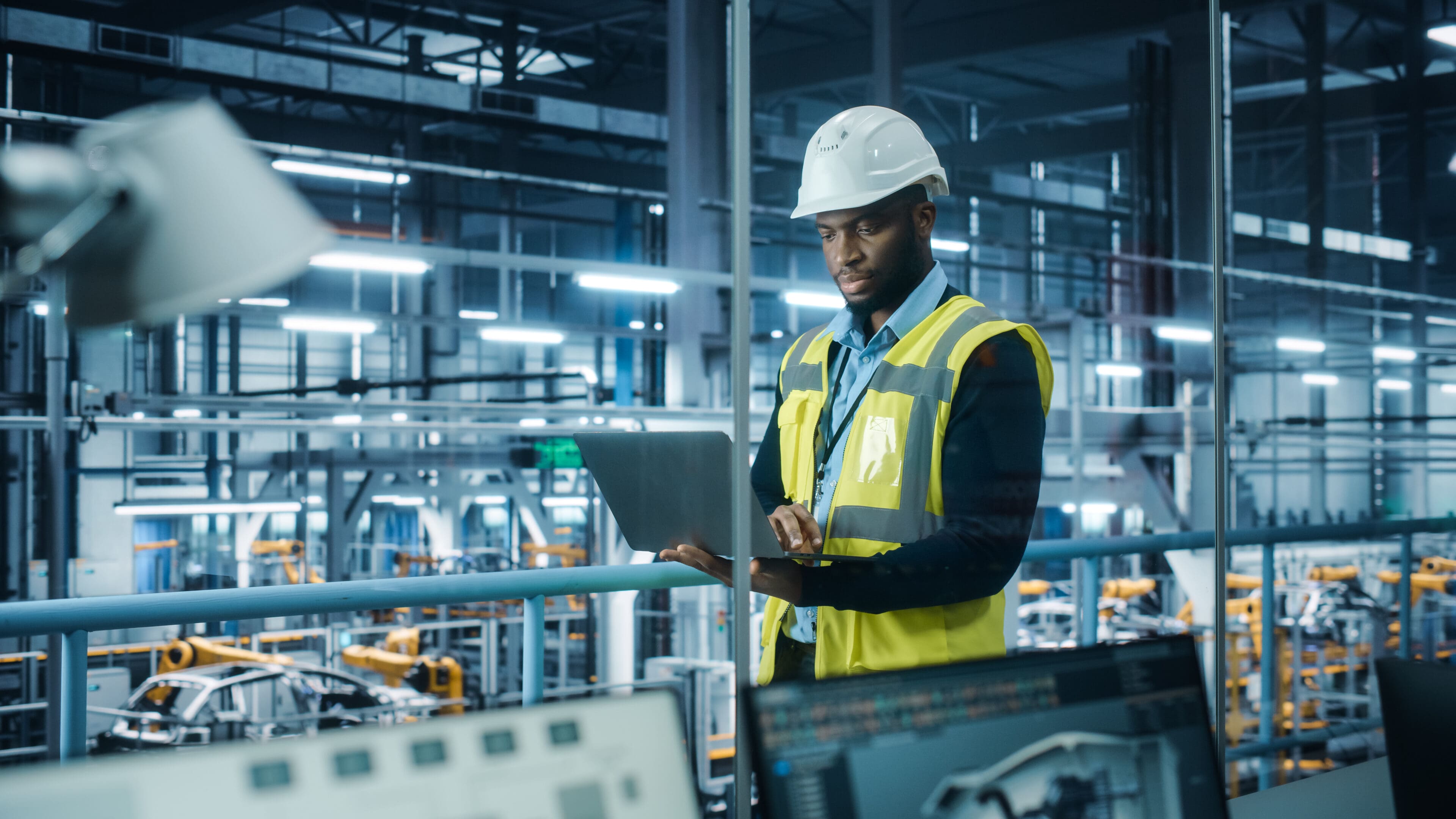
Factory floors are changing. Robots and automated systems that once seemed like science fiction are now commonplace, and this trend shows no signs of slowing down. Here’s what’s driving the automation revolution and why it matters for all of us.
The Big Picture: More People, More Demand
The math is simple but powerful. The world’s population is heading toward 9.7 billion people by 2050, according to United Nations projections. That’s a lot more mouths to feed, bodies to clothe, and homes to furnish. Meeting this demand will require manufacturers to dramatically scale up production, and automation is the most practical path forward.
Some experts have suggested that automation might plateau as current technologies mature or as demographic shifts in certain regions reduce consumer numbers. But the global trend tells a different story. While some developed nations face aging populations, the worldwide demand for goods continues to climb.
The Worker Shortage Problem
Here’s a challenge many manufacturers already face: there aren’t enough workers. In developed countries, aging populations mean fewer working-age people available for factory jobs. This creates a serious bottleneck for companies trying to maintain or increase production.
Automation offers a practical solution. Factories can maintain high output with smaller workforces, and automated systems can handle specialized tasks that might otherwise require hard-to-find expertise. This isn’t about replacing people entirely—it’s about keeping production viable when the traditional workforce isn’t available.
The robots of tomorrow won’t just follow programmed instructions. AI-powered systems can now learn from their environment and adapt to new tasks, making them far more versatile than earlier generations of industrial machinery.
Robots Are Getting Smarter
One particularly promising development is the rise of autonomous mobile robots, or AMRs. These machines can navigate factory floors on their own, handling material transport and logistics without human guidance. The market for these robots is projected to surge from $1.6 billion in 2020 to $8.7 billion by 2026—a growth rate of 32.5% annually.
The Smart Factory Vision
The real magic happens when different technologies work together. Imagine robots equipped with advanced vision systems inspecting products for defects with near-perfect accuracy. Or automated drilling and cutting systems guided by AI to perform complex machining with minimal human intervention.
These integrated systems create what industry experts call “smart factories”—production lines that can optimize themselves in real time, reduce waste, improve quality, and boost efficiency. The combination of robotics, artificial intelligence, Internet of Things sensors, and advanced analytics is making this vision a reality.
What Consumers Want
Our shopping habits are changing, and that’s pushing automation forward too. We want more choices, personalized products, and lightning-fast delivery. Traditional manufacturing approaches struggle with these demands, but automated systems can quickly pivot to produce smaller batches of customized items without breaking the bank.
The explosion of online shopping and direct-to-consumer brands has intensified this pressure. Automated order processing, inventory management, and logistics systems are becoming essential for companies trying to meet customer expectations for speed and reliability.
Government Support
Many governments recognize automation as crucial for staying competitive in the global economy. Germany’s Industry 4.0 initiative, for example, aims to transform manufacturing through digital technology and automation. Similar programs are emerging worldwide.
At the same time, policymakers are grappling with automation’s social impacts. There’s growing emphasis on retraining and upskilling programs to help workers adapt to changing job requirements. The goal is to harness automation’s benefits while supporting the workforce through the transition.
Looking Ahead
Factory automation isn’t a temporary trend or a passing fad. It’s a fundamental shift driven by population growth, labor shortages, technological advancement, and changing consumer expectations. Robots will continue to become more capable and intelligent. Their integration with other technologies will create increasingly sophisticated production systems.
For manufacturers, automation isn’t just about efficiency—it’s about survival in a competitive global marketplace. For the rest of us, it means access to more products, faster delivery, and potentially lower prices. The automated factory of the future is being built today, one smart system at a time.
Logic Puzzles
The Man in the Elevator
A man lives on the 10th floor. Each morning, he rides the elevator down to leave for work. But when he comes home, he only rides the elevator to the 7th floor, then walks up the last three flights of stairs. Why?
Answer: The man is short and can’t reach the 10th floor button. He can easily press the ground floor button (it’s at the bottom), but the 10th floor button is too high for him to reach. The highest button he can reach is the 7th floor, so he presses that and walks the rest of the way up.
The Light Switches
You’re in a room with three light switches. Each switch controls a different light bulb in another room, but you don’t know which switch goes with which bulb. You can only enter the bulb room one time. How can you figure out which switch controls which bulb?
Answer:
- Turn on Switch #1 and leave it on for 10-15 minutes
- After waiting, turn off Switch #1 and immediately turn on Switch #2
- Go into the room with the bulbs right away
Now you can tell which switch controls which bulb:
- The bulb that’s on = Switch #2 (you just turned it on)
- The bulb that’s off but warm = Switch #1 (it was on long enough to heat up)
- The bulb that’s off and cold = Switch #3 (you never turned it on)
The Poisoned Wine
You have 1,000 bottles of wine, and one is poisoned. The poison takes exactly 24 hours to work. You have 10 test subjects available. What’s the quickest way to find the poisoned bottle?
Answer: You can do it in just one day using binary code. Here’s how:
Number each bottle from 1 to 1,000 in binary (a number system using only 1s and 0s). Since you have 10 test subjects, each one represents a different position in the binary number. Give each test subject wine from bottles where their position shows a “1” in the binary code.
After 24 hours, look at which test subjects got sick. Their positions create a binary number that tells you exactly which bottle was poisoned.
Example: If test subjects in positions 1, 2, 4, and 8 get sick, that creates the binary pattern 1111. This converts to a specific bottle number in decimal.
Fun Facts With Phil
Our CEO and Owner, Phil Kieselhorst, has a tendency to deliver random facts at random points in the day. These are a complication of the most interesting facts that have been mentioned lately.
- Fact 2: Tardigrades, also known as water bears or moss piglets, are tiny water-dwelling creatures, have survived space exposure. In 2007, scientists sent tardigrades into space, where they survived the vacuum, radiation, and extreme temperatures for over a week.
- Fact 3:In the 17th century, the Netherlands experienced “Tulip Mania.” The prices of tulip bulbs reached extraordinarily high levels before crashing. At its peak, some tulip bulbs were worth more than a house, demonstrating an early example of a speculative bubble.
- Fact 1: Spiders use hydraulic pressure to move their legs. Spiders don’t have muscles in their legs that contract to move them like humans do. Instead, they use hydraulic pressure to extend and retract their legs. Spiders have a fluid-filled cavity in their legs called hemolymph, which is analogous to blood in insects.
Take the next step in enhancing your manufacturing process. We invite you to reach out to our team for a consultation. Whether you have questions, need more details, or would like to schedule a demo, we’re here to help. Contact us today to discuss how KIE Solution can optimize your production efficiency and streamline your operations.